
HOW THE WORK IS MADE
From feeling
to thread.
The process is never mechanical — even when the machine runs. Every decision that shapes a work is made slowly, deliberately, by hand. What follows is not a technical guide. It is a description of how feeling becomes surface.
I
Memory & feeling
Each work begins not with a photograph but with a feeling — the emotional residue of a place after time has worked on it. What remains is not what was seen but what stayed. This starting point determines everything that follows: the palette, the density, the emotional temperature of the final surface.
STARTING POINT
A place, held in memory. Not documented — felt.
II
Image development
The feeling is developed into an image — not a documentation of reality, but a reconstruction shaped by time, emotion, and the decisions made in the studio. Colour is not chosen for accuracy. It is chosen for truth. The image at this stage already contains the emotional position of the work — its distance from reality, its state of memory.
WHAT IS BEING BUILT
Not a likeness. An emotional reconstruction.
III
Manual digitizing
Each image is manually digitized — a labour-intensive translation that determines how thread will behave across every part of the canvas. Stitch direction, fill type, density, sequence: every variable is set by hand. This is where the texture of the final work is determined, before a single stitch is made. It is the longest part of the process.
WHAT THIS CONTROLS
Direction, density, and the behaviour of light across the finished surface.
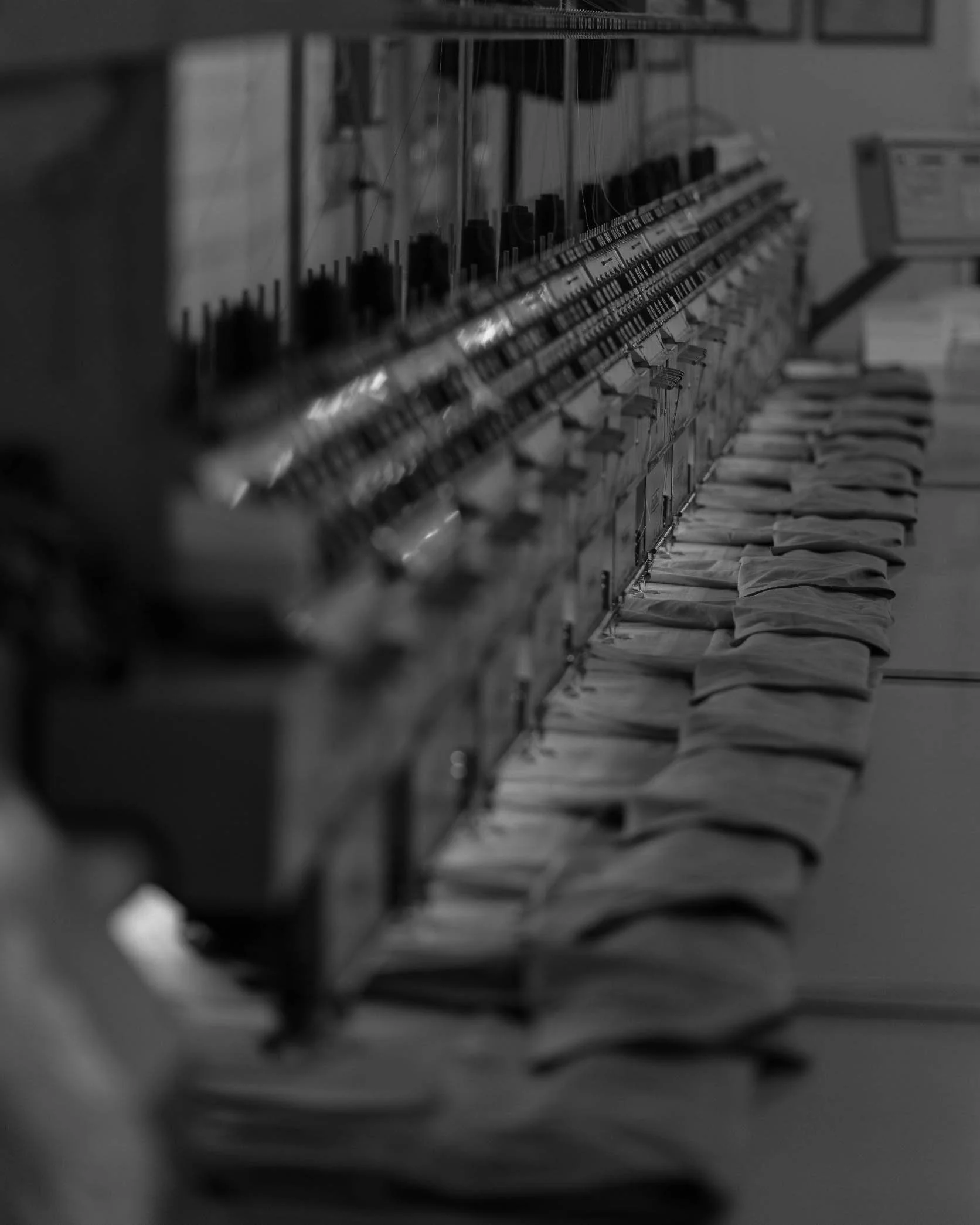
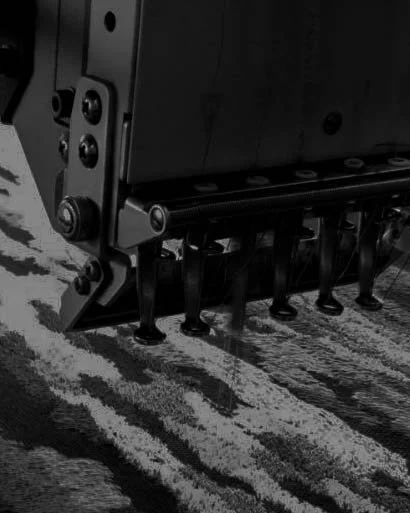
Industrial embroidery machine — Bangkok studio
IV
Layered embroidery
Industrial machines run — but are guided through hundreds of thousands of stitches. Thread tension, repetition, and variation accumulate into a surface that reveals itself differently under different light. Subtle imperfections become part of the final image. The process embraces both control and the unpredictability that makes each piece unrepeatable.
STITCH COUNT
200,000 – 1,000,000+ stitches depending on the work.
EDITION
Every work is one of one. The exact form cannot be repeated.
THE RESULT
A surface that holds
more than it shows.
Each finished work cannot be fully understood in a photograph. The texture, the shift of thread under light, the presence of a surface built from hundreds of thousands of decisions — these are things that only exist in the physical object.